
I know. It’s Friday, and Friday is when I normally post a review of some romance novel I have recently read. But I had a wedding to attend this last week, and I had been focused on working on my next book and didn’t have something planned out for the review, thinking something I might read on the plane would inspire me.
Well, while I did read on the plane, the review never got written. Meanwhile, I decided this week that I couldn’t stand the state of my desk anymore and it needed to be cleaned. Right. Now. So on Tuesday, everything got pulled off my desk (and out from under it) and I have spent the last three days trying to reassemble my life from the pieces of that. It’s …been a process. It would help if I wasn’t currently exhausted, but that’s asking way too much.
Instead, I thought I might offer my thoughts on a topic I’ve talked about a little bit in some of my reviews. Specifically, my personal philosophy when it comes to categorizing Regency romance novels. I should be clear, this is not a classification system that I expect anyone else to embrace or use themselves, but I figure it might help you as a reader understand where I’m coming from in my reviews.

 I don’t remember when I first started reading Regency romances. Probably sometime in high school. I read every one I could get my hands on, most of which were published by Avon or Harlequin. They were fun, light reads that made me smile and encouraged my dreams of finding love and my own happy ending. A chance to escape from the pressures of school and my distinctly date-less life.
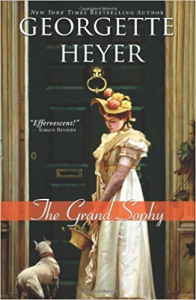
For all my explorations in the field, I didn’t discover some of the bigger authors until relatively late — probably because most of my reads were from the library or used book stores. It was a trip to Mendocino where I happened to pick up a Georgette Heyer novel (Frederica, to be precise) and first discovered her writing, devouring the book while sitting at a window table in the hotel, sipping a gin and tonic. My copy of the Grand Sophy comes from a small bookstore in Salzburg, thoroughly enjoyed during a long hot bath in the delightful hotel we stayed at there.
It was only after reading Heyer that I began to recognize what I consider to be the two main styles in Regency romance, a pattern I continue to observe today. It’s possible there are a few signs of a third emerging, but I’ll get to that at the end.
The first style, of course, is the one pioneered (introduced?) by Heyer. A comedy of manners, if you will, where the plot depends more on the characters and their quirks than any external factors. Heyer’s books are all what we would call clean romances today, with at most a kiss between the hero and heroine, but the style doesn’t have to be. The biggest difference, however, is the extent to which suspension of disbelief is required for the plot to work. (In general, it’s not.) Books in this style tend to stay closer to the norms of Regency behavior. The hero and heroine are both going to be members of the upper class. Social mores are more closely observed.
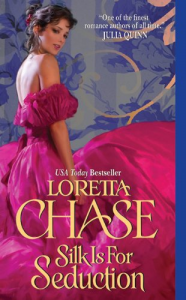 The second style is the more common, what I would think of as the more “modern” Regency romance. You’re far more likely to find a hero or heroine who wouldn’t feel out of place in our modern society and far more awareness of contemporary issues like PTSD (for men who served in the Napoleonic Wars, for example) or women’s rights and how restricted they were during the Regency period. Spicier sex scenes and female empowerment are the norm, and the plot typically has more external drivers. It’s not uncommon to find heroes serving as spies or heroines disguising themselves as courtesans or young men to solve a mystery. Of course, all of this requires some suspension of disbelief by the reader when it comes to comparison with the known social mores of the day — the further the deviation, the more is asked of the reader. I actually tend to think of most of the books in this category (and just to be clear, I believe this is where my books fall too!) as taking place in a shared alternate history, one co-created by the authors and the readers for our mutual enjoyment. Of course, it’s not for everyone, but this gives us a space to explore characters and plots that wouldn’t be possible in the first style of book.
There are a few books that defy classification, of course. Books where the author has taken pains to stay within the realm of historical accuracy even while pushing for more modern concepts. Courtney Milan comes to mind as an author who does this particularly well, although I’m sure there are others.
I happily read both, of course. I write what I consider to be the second style, in part because I in no way believe I could do the first style justice (Heyer sets a high bar!) and in part because the plots that I want to write fall more in that direction. But maybe this helps explain why some books are very much your style while others aren’t quite. Let me know if it does!